UK TAX July 2026 · 8 min read

The £100,000 tax trap: why earning more sometimes means keeping less

Between £100,000 and £125,140, the UK government takes 60 pence from every extra pound you earn. It's not a glitch. It's designed this way. And it catches out thousands of professionals who don't realise it's happening to them.
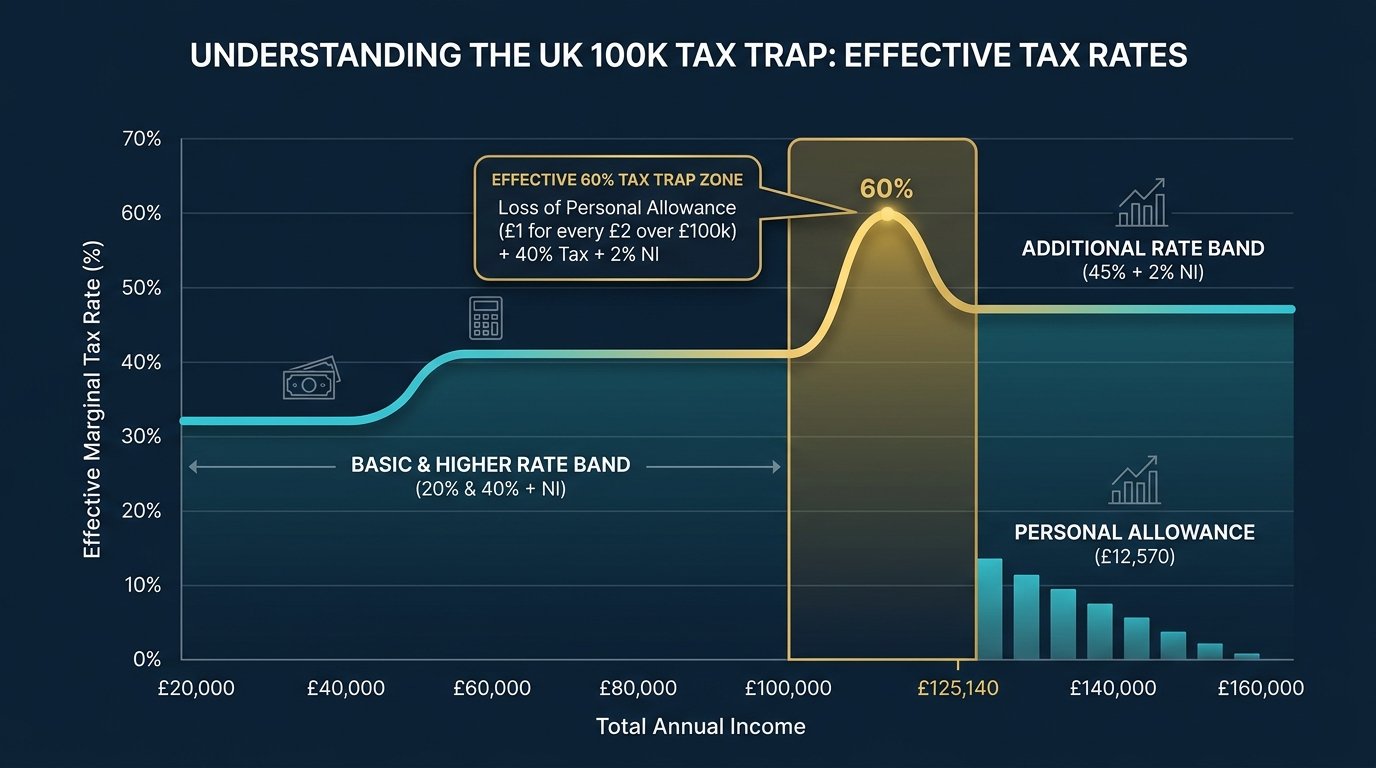
First, what actually happens at £100,000

The UK's personal allowance — the amount of income you earn tax-free — is £12,570 in 2026/27. Everyone gets it. Except people who earn over £100,000. For them, the allowance starts disappearing.

For every £2 you earn above £100,000, you lose £1 of your personal allowance. By the time you reach £125,140, your entire £12,570 personal allowance has been clawed back. It's gone. You're paying income tax from pound one.

That clawback is the trap. Here's why it creates a 60% marginal tax rate:

  • On earnings above £100,000, you're already paying 40% income tax (higher rate)
  • The personal allowance withdrawal means you're also losing £0.50 of allowance for every extra £1 earned
  • That lost allowance was protecting £0.50 from 40% tax = 20p of additional tax
  • Total: 40p from higher rate + 20p from allowance withdrawal = 60p per £1 earned

What the numbers look like in practice

Let's take three UK software engineers, all at senior level:

Gross Salary Annual Take-Home Monthly Effective Rate
£95,000 £63,000 £5,250 33.7%
£112,570 (allowance fully gone) £69,462 £5,789 ~38.3%
£125,140 £76,278 £6,357 39.1%

Now notice what happens between £95,000 and £112,570. The person earns an extra £17,570 gross. But they only keep an extra £6,462. That's 36.8 pence in the pound on those additional earnings. Some of that band hits 60p.

A specific example: someone gets a pay rise from £100,000 to £103,000 — £3,000 more gross. After the 60% combined effect, they keep £1,200 extra per year. Their boss thinks they gave them £250/month more. They actually got £100/month more.

Who gets caught in this trap?

The bracket catches far more people than you'd expect. In London especially, the following are commonly in the £100k–£125k zone:

  • Mid-career city solicitors (3–5 PQE at Silver Circle or Magic Circle firms)
  • Senior software engineers at product companies and scale-ups
  • NHS consultants at entry to mid scale
  • Finance professionals: VPs at investment banks, senior managers at Big Four
  • Senior civil servants (Grade 6–7 in some departments)
  • Experienced GPs on the higher end of the BMA salaried scale

None of these are unusual jobs. And many of their employers pay salaries in this band without thinking about what it means for the employee's effective take-home.

The legal way out: pension salary sacrifice

This is where it gets interesting — and where some professional advice is worth a great deal. The most widely used strategy is to make pension contributions that bring your adjusted net income back below £100,000.

If you earn £115,000 and want to recover your personal allowance, you need to reduce your taxable income by £30,000 (because £30,000 × 50p = £15,000 of allowance restored, getting you back the full £12,570 requires bringing income to £100,000). You could contribute £15,000 to a pension — that drops your adjusted net income to £100,000 and recovers the full allowance.

The tax saving on that £15,000 pension contribution: approximately £9,000 (the 60% effective rate on that band). You've reduced your cash take-home by £6,000/year (£500/month), but added £15,000 to your pension. The pension gets £15,000 for a net cost of £6,000. That's effectively a 250% return on the cash cost — before any investment growth.

Many financial advisers describe this as one of the most efficient tax strategies available to UK earners, precisely because the 60% band makes the saving so pronounced.

Childcare and the additional twist

There's another layer to this that trips up parents. Tax-Free Childcare — up to £2,000/year per child in government top-up — is only available to families where both parents earn under £100,000 adjusted net income. Earn £100,001 and you lose it for the whole family entirely. No tapering, just a cliff edge.

For families with two children in childcare, losing Tax-Free Childcare at the £100,000 cliff can cost £4,000/year. When combined with the personal allowance withdrawal, the effective marginal rate on earnings from £99,000 to £101,000 can technically exceed 60% for parents with children in childcare. This makes the £100k threshold genuinely toxic for a specific group of earners.

Self-assessment: don't get caught out

If you're earning over £100,000 and being taxed through PAYE, your tax code will likely have already been adjusted — but it's worth checking. HMRC should issue a tax code that removes your personal allowance automatically when you exceed £125,140, but if you've had a pay rise mid-year, there can be lag.

Anyone earning over £100,000 should be completing a self-assessment return each year. If you're not sure whether you need to file one, the answer is almost certainly yes.

Calculate exactly what you keep: Our UK salary calculator shows the personal allowance withdrawal effect at every salary point, including the 60% band. Enter any salary from £95,000 to £130,000 to see how the curve behaves.

One final thing worth knowing

The £125,140 threshold has been frozen — as has the personal allowance of £12,570. In an environment of wage inflation, more people drift into this bracket each year without getting a real terms pay rise. It's sometimes called "fiscal drag" — and it's a significant factor behind the increasing number of taxpayers self-assessing and coming to terms with the UK's effective rate structure.

The frustrating irony is that the 60% effective band was never voted in as a policy. It emerged as a mathematical consequence of the personal allowance taper introduced in 2010. Twelve years later, it's still there — and it's catching more earners than ever.

Related: UK lawyer salaries after tax · UK software engineer take-home · NHS consultant salaries
